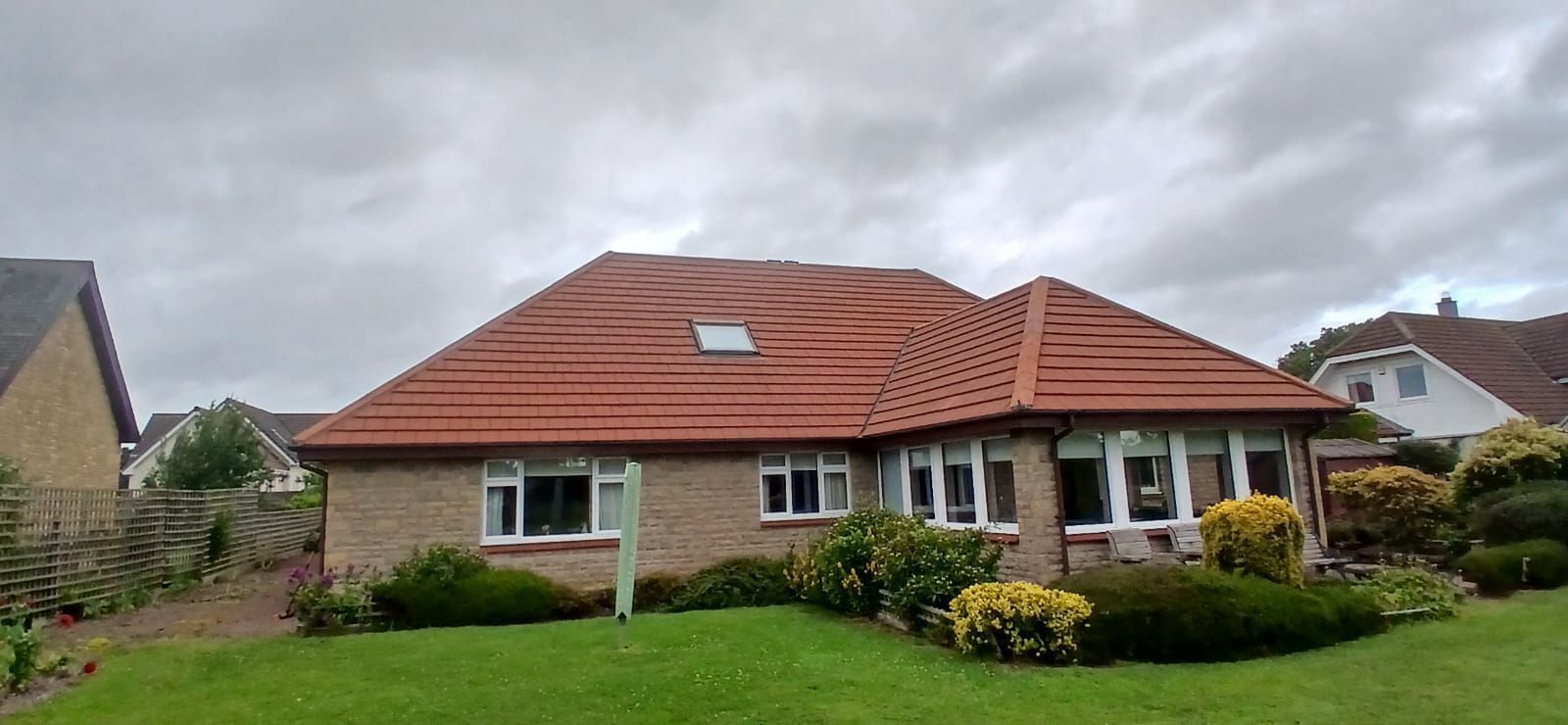
How Does Moss Cause Roof Tiles to Crack?
A cracked tile rarely announces itself. It sits there quietly on the slope, sometimes for years, until a wind-driven rain finds the split and water starts tracking into the roof space below. When the tile is lifted and examined, there is often a tell-tale ring of moss around the fracture, and the two are connected more directly than most homeowners realise.
Moss does not crack a tile the way a falling branch would, in one obvious blow. It works slowly, using water, ice, and its own growth to weaken and split tiles over several seasons. Understanding that process explains why a green roof is worth taking seriously, and why the damage is so much easier to prevent than to repair.
The Core Problem: Moss Holds Water
Everything about moss-related tile damage starts with water. Moss has no roots and absorbs moisture directly through its leaves, acting like a permanent damp sponge spread across the tile surface. Where a clean tile sheds rain and dries in the sun and wind, a mossy tile stays wet, sometimes for days after the rain has stopped.
That constant dampness is a problem in itself, softening surface coatings and keeping the tile from ever fully drying. But its most damaging effect comes in cold weather, when the water moss holds against and within the tile has the chance to freeze.
Freeze-Thaw: The Main Mechanism
Water expands as it freezes, increasing in volume by roughly nine percent. That expansion is a powerful force, and it is the single biggest way moss leads to cracked tiles.
Here is the sequence. Moss holds water against the tile surface and traps it in the tiny pores of concrete or clay and in any existing hairline cracks. Overnight temperatures drop below freezing, common through a Sussex winter, and that trapped water turns to ice and expands. The expanding ice pushes outward on the surrounding material, widening pores and cracks by a fraction. When temperatures rise, the ice melts, water seeps a little deeper, and the next freeze pushes harder still.
Repeated cycles do the damage. A single freeze does little. But a roof can go through dozens of freeze-thaw cycles in a winter, and each one nudges the damage forward. Over several years this repeated expansion flakes the surface of concrete tiles, a process called spalling, and can widen a harmless hairline into a full crack. Moss makes all of this far worse simply by ensuring the tile is wet when the freeze arrives.
Tip: The winters that do the most tile damage are not the coldest ones but the ones that swing repeatedly above and below freezing. Each swing is another freeze-thaw cycle. A mossy roof going through a mild, changeable Sussex winter can take more freeze-thaw punishment than a clean roof in a hard, steady frost.
How Moss Works Into the Joints
Beyond freeze-thaw, moss causes mechanical problems by growing where it should not. As moss spreads it pushes into the gaps between overlapping tiles and along the joints. Though moss itself is soft, established growth builds up bulk in these gaps, and that bulk can very slightly lift the edge of a tile or hold it fractionally out of position.
A tile lifted even a little sheds water less effectively, allowing more moisture underneath, which feeds more growth, which lifts the tile further. On top of this, the accumulated growth and debris in the joints keep those areas permanently damp, extending the freeze-thaw problem into the parts of the tile that are hardest to dry out. The combined effect is that tiles at the laps and joints, already the most vulnerable points, take the most punishment.
Why Older and Porous Tiles Crack First
Not all tiles crack at the same rate. Concrete tiles are made with a surface coating that resists water when new, but that coating erodes over years of weathering. An older concrete tile is far more porous, soaking up and holding more water, which gives freeze-thaw more to work with. Worn clay and natural slate with surface faults behave similarly.
This is why moss and tile age combine into a compounding problem. Older tiles hold more water, moss keeps them wetter still, and the freeze-thaw damage that results erodes them faster, exposing yet more porous material. A roof caught in this cycle deteriorates noticeably quicker than its age alone would suggest.
Breaking the Cycle Before Tiles Split
The good news is that the whole process depends on one thing you can control: keeping moss and trapped water off the tiles. Remove the moss and the tiles dry properly again, so there is far less water present when temperatures drop. That single change dramatically reduces freeze-thaw pressure.
Removal has to be done safely, though. Pressure washing to blast moss off can crack tiles directly and strip the surface that protects them, accelerating exactly the porosity problem you are trying to avoid. A no-contact, water-based method lifts the moss from mobile scaffold towers or ground level without walking the roof or hammering the surface. Following the clean with a non-toxic biocide keeps new moss from re-establishing, so the tiles stay drier for longer. A careful Roof Cleaning with aftercare protection is the practical way to break the cycle.
Clearing the debris that washes off the roof matters too, because blocked gutters keep the roofline saturated and feed fresh growth. Pairing roof work with
Gutter Cleaning keeps water moving off the roof as it should.
Moss cracks roof tiles mainly through trapped water and freezing. Moss holds rainwater against the tile surface and works into the joints between tiles. When that trapped water freezes it expands by about nine percent, forcing tiny cracks wider with every freeze-thaw cycle. Over several winters this repeated pressure flakes tile surfaces and splits already-weakened tiles. Removing moss and keeping the surface dry stops the cycle.
Frequently Asked Questions
Can moss crack a brand-new tile?
It is much less likely in the short term. New tiles have their full protective surface and low porosity, so they hold little water and resist freeze-thaw well. Moss on a new roof is more of an early warning to act before the tile surface weathers and becomes vulnerable. Given time and neglect, even good tiles will start to suffer.
How many years does it take for moss to crack tiles?
There is no fixed timescale, because it depends on tile age, porosity, shade, and how many freeze-thaw cycles each winter brings. On an older, porous, heavily shaded roof, visible surface flaking and cracking can develop within a few years of heavy growth. On a newer roof it takes considerably longer. Regular checks catch it well before it becomes serious.
If a tile is already cracked, does removing the moss help?
Removing the moss will not repair an existing crack, but it stops that crack getting worse by keeping water and ice out of it. A cracked tile should be replaced to keep the roof watertight, and clearing the surrounding moss protects the neighbouring tiles from heading the same way. An inspection can identify which tiles need replacing.
Does the type of moss affect how much damage it causes?
The species matters less than the amount and where it grows. Any moss that holds water against the tiles and builds up in the joints sets up the freeze-thaw and lifting problems described here. Thick, established growth across the slope and packed into the laps is the real risk, regardless of the exact type.
Will a preventative treatment stop tiles cracking?
A biocide does not strengthen tiles, but by slowing the return of moss it keeps the surface drier through winter, which reduces the freeze-thaw pressure that cracks tiles. Combined with prompt removal of any growth and clear gutters, it is one of the most effective ways to protect vulnerable tiles from moss-related cracking.
Protect your tiles before winter — Book a no-contact roof clean and inspection to remove moss and check for early cracking. Ben's Roof Cleaning includes a free patch test and optional biocide to keep tiles drier. Call 0127 300 5233
Stopping the Damage Before It Starts
Moss cracks roof tiles not through force but through patience, holding water where it should drain, freezing and thawing it through the surface, and working into the joints until tiles lift and split. Every step of that process needs the roof to stay wet, which is precisely what moss guarantees. Take the moss away, keep the tiles dry, and clear the gutters that drain them, and the freeze-thaw cycle that does the damage largely stops. It is a slow problem with a simple prevention, and acting before the cracks appear is always cheaper than replacing tiles after they do.