Is Roof Moss Really Bad for a Roof? Myths vs Facts
Ask ten homeowners whether roof moss matters and you will get ten different answers. Some treat a green roof as a disaster; others insist it is purely cosmetic and best left alone. The reality sits between those two positions, and the difference comes down to how much moss there is and how long it has been growing.
Plenty of myths have grown up around roof moss, and believing the wrong one can be costly either way, whether that means panicking over a harmless dusting or ignoring growth that is quietly working under the tiles. This guide sorts the common claims into myth and fact so you can judge your own roof sensibly.
Myth: Moss Is Purely Cosmetic
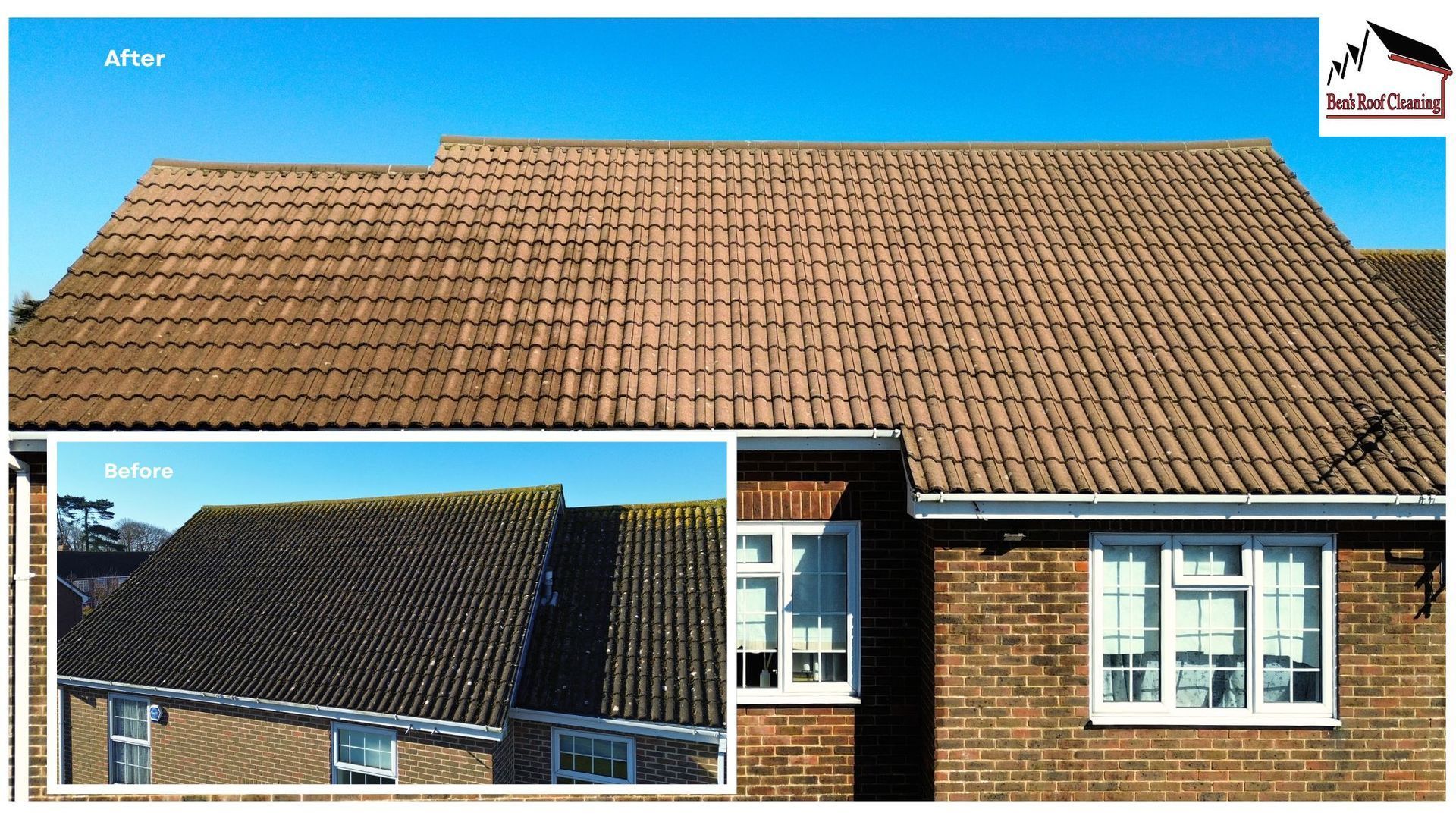
This is the most common misconception, and it is only half true. In its earliest stage, a thin scattering of moss really is mostly an appearance issue. The trouble is that moss does not stay thin. It is a water-loving plant, and every clump acts like a small sponge, holding rainwater against the tile surface long after the rest of the roof has dried.
That trapped moisture is where cosmetic turns to structural. Constant dampness slows the drying of the tile, encourages further growth, and in freezing weather sets up the conditions for real damage. So while the earliest moss is cosmetic, treating all moss as harmless ignores where it inevitably leads.
Fact: Moss Holds Water Against the Tiles
The single most important thing to understand about moss is its relationship with water. Because moss absorbs moisture directly through its leaves and has no roots to shed it, a mossy roof stays wet far longer than a clean one. This matters for two reasons.
Weight. Saturated moss is surprisingly heavy. A slope carrying thick, waterlogged growth adds a load the roof was not designed to carry permanently, and that weight is concentrated on the tiles and their fixings.
Freeze-thaw damage. When water trapped by moss freezes, it expands by roughly nine percent. That expansion exerts pressure on the tile surface and into any small cracks or pores. Repeated freezing and thawing through a Sussex winter can flake the surface of concrete tiles and widen existing faults, a process that would be far slower on a dry, clean roof.
Myth: A Pressure Washer Will Sort It Out
Many people assume the fix for bad moss is simply to blast it off with a pressure washer. In practice this often causes more harm than the moss did. High-pressure water can strip the protective surface coating from tiles, force water up under the laps and into the roof space, and dislodge the mortar bedding on ridges and hips.
Safe removal uses a gentler, no-contact approach, lifting the growth with specialist equipment from mobile scaffold towers or ground level rather than forcing it off under pressure. The aim is to remove the moss while leaving the tile surface intact, which is the opposite of what a pressure washer tends to achieve.
Warning: Walking on a mossy roof to remove growth by hand is genuinely dangerous. Moss makes tiles slippery, and tiles that have been weakened by long-term moss can crack underfoot. This is a major reason roof cleaning is done from towers or the ground rather than by standing on the slope.
Fact: Moss Blocks Drainage and Damages Gutters
Moss does not stay politely on the tiles. As it grows and is loosened by wind and rain, fragments break away and wash down the slope into the gutters. There they build up alongside leaves and grit, forming blockages that stop water draining freely.
Blocked gutters overflow, sending water down the walls and behind the fascia, where it can cause damp, staining, and timber decay. In this way a moss problem on the roof quietly becomes a water problem at the walls. Keeping gutters clear with regular
Gutter Cleaning is part of managing moss, not a separate job, because the two are directly connected.
Myth: Moss Only Affects Old Roofs
It is true that older roofs tend to carry more moss, because weathered tiles are more porous and hold water more readily. But newer roofs are not immune. Any roof with shaded, north-facing slopes, overhanging trees, or debris along the roofline can develop moss regardless of age. A roof only a few years old sitting under heavy tree cover can green up faster than an older roof in an open, sunny position.
Age influences how quickly moss establishes, but exposure, shade, and dampness are the real deciding factors. Judging your risk by the roof's age alone can leave a young roof neglected until the growth is well advanced.
Roof moss is more than a cosmetic issue. While a light dusting causes little immediate harm, established moss holds water against the tiles, adds weight, blocks drainage, and can lift and crack tiles over time. It rarely stays light, so the real question is not whether moss is bad but how far it has been allowed to progress. Removing it early and treating the surface prevents the worst of the damage.
Fact: Early Action Is Far Cheaper Than Late
The strongest argument for taking moss seriously is economic as much as structural. Removing a light-to-moderate covering and applying a preventative treatment is a simple, planned job. Dealing with heavy, long-established moss that has already cracked tiles, blocked gutters, and let water into the roof space is a larger and more expensive undertaking, sometimes involving tile replacement and internal repairs.
In our 15 years working on Sussex roofs, the pattern is consistent: the homeowners who act while the moss is still moderate spend far less than those who wait until the damage is visible from inside. A gentle
Roof Cleaning followed by biocide protection is a modest, planned cost that prevents a much larger unplanned one.
Frequently Asked Questions
Can roof moss cause a leak on its own?
Moss does not usually puncture a sound tile by itself, but it creates the conditions that lead to leaks. By holding water against the tiles, lifting them slightly, and encouraging freeze-thaw cracking, it opens paths for water to reach the underlay and timber. On an older or already-damaged roof, heavy moss can be the difference between a watertight roof and one that starts to let water in.
Is it ever safe to just leave moss alone?
Only in the very earliest, lightest stage, and even then it is worth monitoring. Because moss steadily worsens on a damp, shaded roof, leaving it almost always means a bigger problem later. A quick professional assessment will tell you whether your growth is still cosmetic or already causing harm.
Does moss damage all types of tiles equally?
No. Porous concrete tiles and worn clay tiles are more vulnerable because they hold water and give moss an easier grip. Smooth, glazed, or newer tiles resist growth better. Even so, no tile is completely safe from the water-holding and freeze-thaw effects of heavy moss over time.
How do I know if my moss problem is serious?
Signs of a serious problem include thick, cushiony growth across whole slopes, moss visibly lifting or displacing tiles, gutters overflowing or full of green debris, and any damp patches or staining inside the loft. If you see these, the moss has moved well beyond cosmetic and should be dealt with promptly.
Will cleaning the moss off damage my roof?
Done correctly, no. The risk comes from aggressive pressure washing or walking the roof, not from cleaning itself. A no-contact, water-based method removes moss while protecting the tile surface, and a patch test beforehand confirms the approach suits your particular tiles.
Find out if your moss is a real problem — Book a free roof inspection to check whether growth has reached the point of damage. Ben's Roof Cleaning uses a safe no-contact method with a patch test and optional biocide protection. Call 0127 300 5233.
The Honest Answer on Roof Moss
So is roof moss really bad for a roof? A trace of it is not, but moss almost never stays a trace. Left on a damp, shaded Sussex roof it thickens, holds water, adds weight, feeds freeze-thaw cracking, and blocks the drainage that keeps water off your walls. The myths that let people ignore it, that it is only cosmetic, that it only affects old roofs, that a pressure washer will fix it, all fall apart once the growth is established. Treat moss early and it stays a minor, manageable job. Leave it, and it becomes exactly the problem the sceptics said it never would.